Fresh Air · Podcast summary
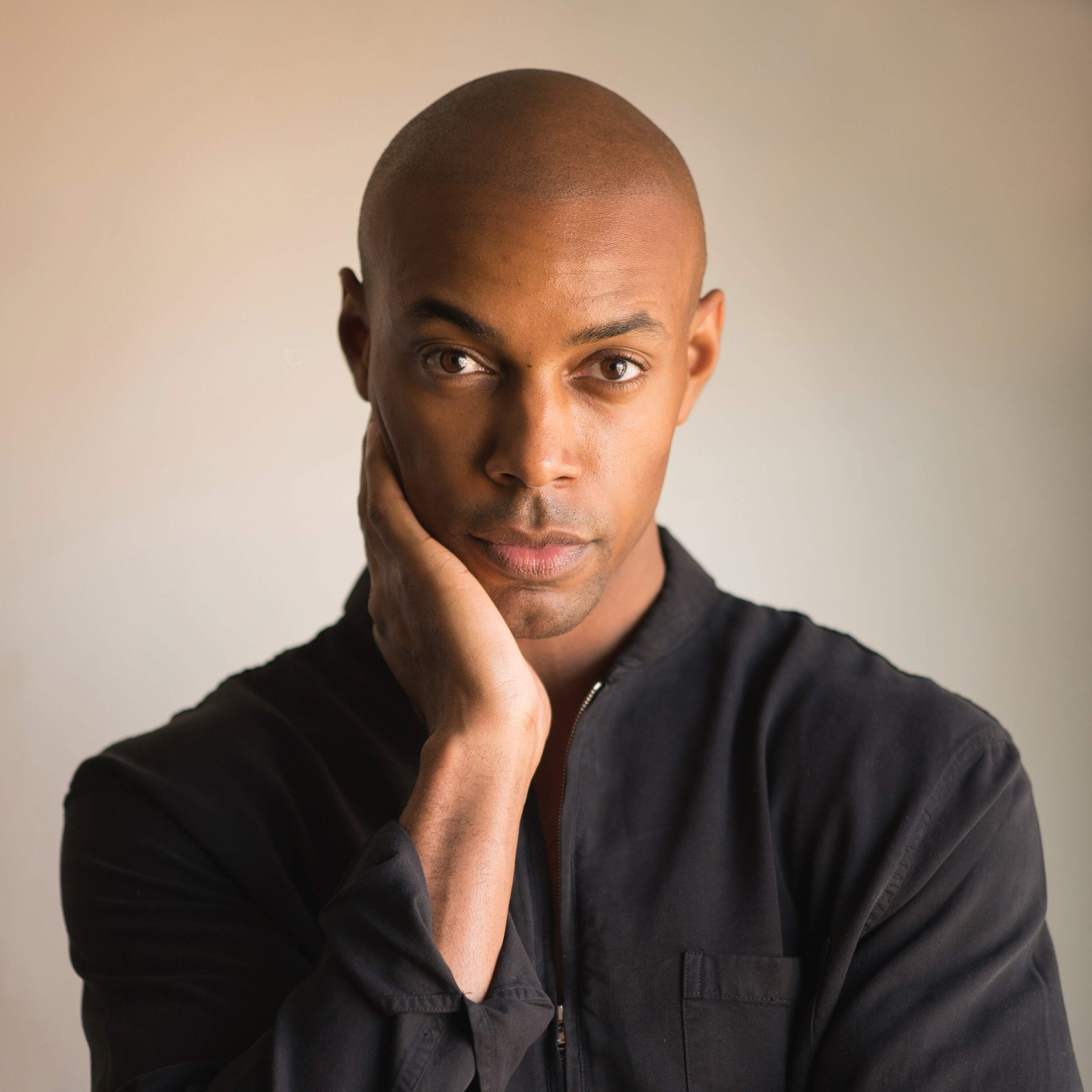
Casey Gerald says ruining his reputation saved his life
Writer Casey Gerald discusses his new book, "The Great Refusal," and the choices he made to walk away from success and redefine his life.
 Listen on the show ↗
Key takeaways
- 🚶♂️Casey Gerald walked away from success twice, first in 2016, to pursue an unknown path of self-discovery.00:21
- 🧠Gerald's therapist helped him differentiate between himself and his problems, using the analogy of a driver and a vehicle.01:57
- ❤️He defines "refusal" as "devotion" to what truly matters, encouraging people to let go of what isn't theirs.02:01
- 🌍He views "the end of a world" as distinct from "the end of the world," suggesting that change and endings are natural parts of life.02:05
- 🤔He describes his decision to disappear as a "desperate one," not running from something, but towards an unknown purpose.02:10
- ✨Gerald emphasizes trusting one's inner feelings and the intuition that something is wrong, as it points to a vision of what is right.04:08
Chapters
- 0:16Introduction to Casey Gerald and "The Great Refusal"
- 3:24The Decision to Disappear and Write
- 8:23The Cost of Being a "Token"
- 13:43The Malpractice of Elite Institutions
- 26:59The End of a World, Not The World
- 37:26Refusal as Devotion
- 40:40The Power of Oak Cliff and Trusting Your Inner Voice
- 1:00:18Refusal vs. Giving Up
The digest
Casey Gerald, author of "The Great Refusal," joined Tonya Mosley on Fresh Air to discuss his journey of walking away from conventional success and the profound insights he gained along the way. Gerald's story is one of radical self-discovery, challenging societal expectations, and finding true purpose.
Walking Away from Success
Tonya Mosley began by highlighting Gerald's unique path: walking away from his own success not once, but twice. The first instance was in 2016, at the peak of his career. Gerald, a kid from Oak Cliff, a working-class neighborhood in Dallas, had achieved what many would consider the American Dream: a football scholarship to Yale, a job at Lehman Brothers, an MBA from Harvard, and the creation of a successful nonprofit that landed him on magazine covers and TED stages. He even opened for President Barack Obama. A New York Magazine headline famously asked, "Does Casey Gerald know how to fix America?"
Yet, in 2016, he shut down his nonprofit, stopped answering calls, and disappeared. His first memoir, "There Will Be No Miracles Here," was his initial report back. After another period of silence, he has returned with "The Great Refusal," a book that reads less like a memoir and more like a challenge. Mosley noted that Gerald describes his choice to disappear as a "desperate one." Gerald clarified that he wasn't running away from anything, but rather running towards something, though he didn't know what it was at the time.
Keep reading in The Digest
The full 7-minute article, 6 more sections, and every new episode from Fresh Air and the creators you follow.
- The Burden of Being "The One"
- The Malpractice of Elite Institutions
- The End of a World, Not The World
- Refusal as Devotion
- The Power of Oak Cliff and the Importance of Trust
- Refusal vs. Giving Up
More from Fresh Air

Best Of: Kyle MacLachlan / Inside the ‘romance scam’
Kyle MacLachlan reflects on his career shaped by David Lynch, while Wired's Andy Greenberg exposes a human trafficking romance scam fueled by AI.
Kyle MacLachlan was David Lynch’s ‘submersible’ into dark places
Kyle MacLachlan reflects on his transformative collaboration with David Lynch, his journey through iconic roles, and the personal challenges behind the scenes.
Best Of: Rhiannon Giddens / Investigating Diddy’s Rise & Fall
Rhiannon Giddens explores Black string band traditions and her role in Beyoncé's country album; Cheyenne Roundtree investigates Sean Combs' complex legacy in music and scandal.

Rhiannon Giddens traces the banjo from her ancestors to Beyoncé
Rhiannon Giddens, the Grammy-winning musician and co-founder of the Carolina Chocolate Drops, discusses her new album "Hope is the Thing with Feathers," her role on Beyoncé's "Cowboy Carter," and the deep historical roots of the banjo, tracing its origins from African traditions to its presence in various American musical forms.
Best Of: Colin Kaepernick / Danielle Brooks
Colin Kaepernick discusses his memoir, "The Perilous Fight," and the reasons behind his kneeling protest. Danielle Brooks shares her experiences playing complex Black female characters and her journey through musical theater.
Looney Tunes animator Chuck Jones / Remembering singer Cassandra Wilson
Film critic Justin Chang reviews "Hope," a South Korean monster movie, and jazz critic Kevin Whitehead remembers singer Cassandra Wilson.