TechCrunch · Video summary
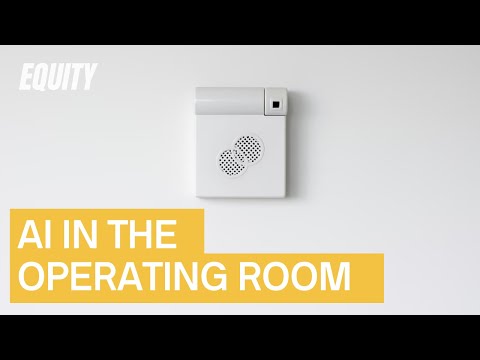
Can AI fix the operating room? This startup thinks so | Equity Podcast
In this episode, Connor McInn discusses how AARA is using AI and thermal sensors to improve operating room efficiency and reduce wasted time in hospitals.

 Watch on YouTube ↗
Key takeaways
- 🎯Hospitals lose 2 to 4 hours of operating time daily due to inefficiencies in scheduling and coordination.02:40
- 🚀Explore the implementation of AARA's AI technology in your hospital to enhance operational efficiency.02:40
- 💡AARA aims to provide air traffic control for operating rooms, streamlining workflows and reducing chaos.03:41
- 📈The startup's initial focus is on automating cleaning processes in operating rooms to speed up turnover.04:36
- 🔍Using thermal sensors, AARA can track the activity in operating rooms without compromising patient privacy.06:41
- 🔧Consider thermal sensing as a privacy-friendly way to monitor operating room activities.06:41
Chapters
- 0:00🎯 Introduction
- 0:10⚙️ Development Progress
- 0:12🚀 AI Growth and Robotics
- 0:14🇬🇧 International Experience
- 0:17📊 Data Utilization
- 0:20🛠️ Technology Overview
- 0:23📅 Future Vision
- 0:29🔍 Thermal vs. Visual Sensing
- 0:31🔄 Challenges in Operating Rooms
- 0:35📈 Low Friction Solutions
- 0:43🏥 Market Challenges
- 0:43💰 Selling to Different Markets
- 0:44🎯 AI Integration
- 0:45🧹 Focus on Cleaning
- 0:45🛰️ Edge Computing
- 0:46🏗️ NHS as a Testing Ground
- 0:46🤝 Collaboration Call
- 0:46🏥 Challenges with Existing Infrastructure
- 0:54🤖 What AARA Does
The digest
High Level Overview
The conversation explores how AARA, a startup recognized by Time as one of the best inventions of 2025, is addressing the critical challenge of inefficiency in hospital operating rooms (ORs). Instead of focusing solely on surgical technology, AARA uses AI-powered thermal sensors to automate coordination tasks that currently cost hospitals 2–4 hours of lost operating room time daily. This improvement in workflow management has significant economic implications for healthcare providers. The insights here are especially valuable for healthcare administrators, medical technology innovators, and AI practitioners interested in practical AI applications in complex operational environments.
Keep reading in The Digest
The full 6-minute article, 14 more sections, and every new episode from TechCrunch and the creators you follow.
- Structured Deep Dive
- Understanding the Operating Room Efficiency Problem
- The Initial Focus on Cleaning and Workflow Automation
- Overcoming Healthcare Resistance with Low-Friction AI Solutions
- Thermal Sensing: Privacy, Simplicity, and Effectiveness
- Data Utilization: Historical Records, Real-Time Alerts, and AI Scheduling Assistants
- Product Development and Market Validation
- Marketing and Adoption Challenges in Diverse Healthcare Systems
- The Role and Scope of AI in AARA’s Platform
- Beyond Operating Rooms: Expanding Applications
- Robotics and the Future of Hospital Automation
- Key Frameworks and Models Introduced
- Practical Implications & Takeaways
- Action-Oriented Summary
More from TechCrunch

Are orbital data centers all hype, or an actual AI infrastructure solution? l Equity Podcast
This podcast covers OpenAI's massive funding round, Whoop's high valuation, Blue Sky's controversial AI feature, and the emerging trend of orbital data centers.

A diverse team will make your startup more successful with Leah Solivan, Taskrabbit l Build Mode
Building a successful startup requires intentional diversity from day one, not as an afterthought. Diverse teams lead to more original ideas and better financial returns.

The new competition for your cap table | Equity Podcast
Family offices are increasingly making direct investments in startups, especially in AI, shifting from passive LPs to active partners to gain access and influence.

How soap opera-TikTok hybrids became a billion-dollar market | Equity Podcast
Micro dramas are a billion-dollar market that originated in China, offering short, vertical video content. Watch Club aims to elevate this genre with quality storytelling for younger audiences, differentiating from existing platforms by focusing on community and intentional engagement.

What happened at Nvidia GTC: NemoClaw, Robot Olaf, and a $1 trillion bet | Equity Podcast
Nvidia's AI chip dominance and $1 trillion projection, Travis Kalanick's Adams venture, and Uber/Rivian's robo-taxi deal highlight key tech industry shifts.

How to fight with your co-founder
Elevate your startup by mastering co-founder dynamics. Prioritize relationship synchronizing and personal operating system upgrades to proactively manage conflict and unlock exponential growth.