Science Journey · Video summary
🎯369 | Bageshwar Dham ne chela bheja Buddh nahi Hindu Dharm ko promote karo varna..| Science Journey
This video challenges the historical and religious basis of "Hinduism," arguing it's a recent construct built upon older Buddhist foundations, lacking ancient textual or archaeological evidence.

 Watch on YouTube ↗
Key takeaways
- 📊The name "Hindu" itself is presented as a foreign designation, originating from the Indus River, rather than an indigenous term for a unified religious identity.02:00
- 🚀Critically examine the historical origins and textual evidence for religious and cultural practices, rather than accepting traditional narratives at face value.02:00
- 🎯The term "Hinduism" is a relatively recent imposition, lacking ancient textual or archaeological evidence of its existence as a distinct religion prior to modern times.02:27
- 📈The "Indus Valley Civilization" is a misnomer; it was a collection of civilizations along various rivers, and its historical significance has been disproportionately highlighted compared to others.05:03
- 💡Historical and archaeological evidence suggests that many sites and practices attributed to ancient Hinduism, including major temples like Somnath, have older Buddhist origins, with Hindu structures built upon them.11:13
- 🔧Investigate the archaeological and historical records of ancient Indian civilizations to understand the evolution of religious and cultural practices.11:13
Chapters
- 0:00🎯 Introduction and discussion on Hindu identity
- 1:04🎯 Debate on the origins of civilization and river-based cultures
- 7:48🎯 Discussion on the age of civilizations
- 8:22🎯 Challenging the antiquity of the Indus Valley and other civilizations
- 13:24🎯 Historical evidence and religious sites
- 16:01🎯 Analysis of Buddhist and Hindu symbols and relics
- 18:54🎯 Discussion on the historicity of figures like Buddha, Vyasa, and the origins of scriptures
- 22:44🎯 Questions about the origins of Vedic and Hindu practices
- 26:07🎯 Debate over the authenticity of historical and religious claims
- 32:41🎯 Discussion on the caste system, Jauhar rituals, and social practices
- 35:02🎯 Argument on the origins and evolution of temples and symbols
- 39:34🎯 Critique of the religious history and textual claims
- 42:51🎯 Final conclusion on the fabricated nature of religious history
The digest
This extensive discussion critically examines the origins, definitions, and historical evidence regarding Hinduism, Buddhism, and ancient Indian civilizations, particularly the Indus Valley Civilization. It challenges popular narratives about Hinduism's antiquity and authenticity, questions commonly held beliefs about religious continuity, and highlights archaeological findings that reveal complex cultural layers beneath revered Hindu sites. This analysis is essential for historians, religious scholars, and anyone interested in understanding the often contested interpretations of Indian history and religion.
High Level Overview
This discourse revolves around clarifying misconceptions about Hinduism as a religion, the relationship between Buddhism and Hinduism, and the historical context of ancient Indian civilizations like the Indus Valley Civilization. The speaker argues that what is presently termed "Hinduism" is a relatively recent construct compared to the older Buddhist tradition and archaeological findings. The conversation critiques reliance on traditional texts and popular beliefs without empirical evidence and underscores archaeological investigations that reveal underlying Buddhist structures beneath famous Hindu temples. This matters because it challenges established socio-religious narratives and encourages reliance on archaeological and historical evidence for understanding Indian heritage.
Keep reading in The Digest
The full 5-minute article, 12 more sections, and every new episode from Science Journey and the creators you follow.
- Structured Deep Dive
- Defining Hinduism and Its Historical Authenticity
- The Indus Valley Civilization and River-Centric Cultural Origins
- Archaeological Evidence Contradicts Religious Narratives
- Buddhism as the True "Sanatan Dharma"
- Critique of Hindu Texts and Historical Inconsistencies
- Disputing Popular Historical Figures and Claims
- Debate on Religious Naming and Identity
- The Role of Brahmins and Caste in Distorting History
- Key Frameworks and Concepts
- Practical Implications & Takeaways
- Action-Oriented Summary
More from Science Journey

JK55 | Vanrind Jatak | Devdatt aur Chicha ne jab Buddh ko khatm karna chaha| Science Journey
The Vanar Jatak tale illustrates overcoming adversaries through truth, righteousness, courage, and sacrifice, countering attempts to discredit Buddhism. It also debunks historical misinformation spread on social media.

आज सम्राट असोक क्यो जरूरी? | Samrat Asok BirthDay Special Giveaway| Balram Siddhu, Science Journey
This video highlights the importance of celebrating Samrat Ashok's Jayanti and critically examines the deliberate suppression of historical figures from marginalized communities in favor of fictional deities, advocating for a return to authentic historical narratives.
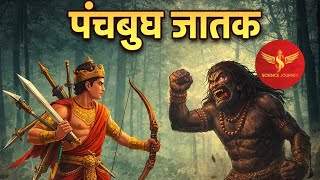
JK53 | PanchBudh Jatak | आपनी निर्भीकता ही आपको महान बनाती है| Saturday Special| Science Journey
The Panch Budh Jatak story highlights unwavering courage and self-belief as the ultimate tools to overcome seemingly insurmountable obstacles, even when conventional methods fail.

Bahujano ke Number kyo kam kar dete hai Braman Teacher| UGC Updates| Prof Vikram, Science Journey
In this video by Science Journey, Prof. Vikram discusses the systematic discrimination faced by Bahujan students in educational assessments, highlighting how their scores are often intentionally lowered to maintain upper caste dominance. He emphasizes the need for awareness and reform in the UGC regulations to protect the rights of marginalized communities.